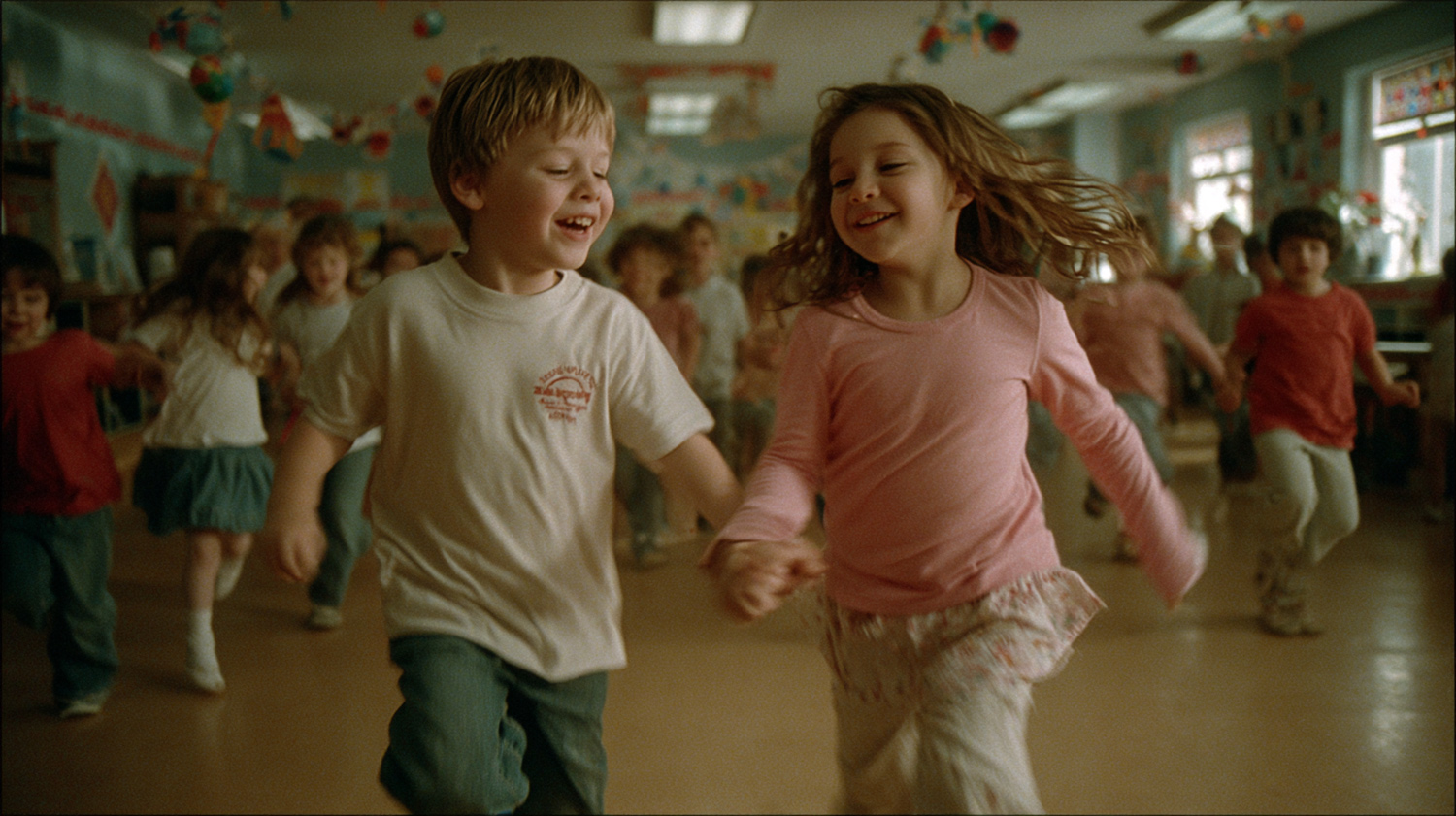


It usually starts in the least scientific place possible: the kitchen, the carpool line, the edge of a bed. A parent watches their child melt down over socks, screens, homework, a sibling's joke, and a question rises like steam. Am I being too strict. Too soft. Too much. Not enough.
In that moment, "parenting style" sounds like it should be a helpful answer. A tidy category. A name for the thing you keep doing even when you swear you will do it differently tomorrow. But the promise of a label can also be a trap, because most parents are not one thing. You can be warm and firm at breakfast, permissive at 4 p.m., and suddenly rigid at 8:30 when the second bedtime request arrives with the persistence of a door to door salesperson.
If you have ever taken a quick online quiz and felt both seen and misunderstood, you are not alone. Parenting researchers have been trying to describe patterns without flattening families into caricatures for decades. What they have found is both reassuring and complicated: the broad patterns really do matter, but they matter most when we treat them as a set of tendencies, not a personality test.
• • •
The popular story begins in the 1960s, when the psychologist Diana Baumrind proposed that everyday parenting tended to cluster into recognizable approaches. She described three styles, later expanded into four: authoritative, authoritarian, permissive, and neglectful. The categories became so sticky that they now show up everywhere from pediatric newsletters to dinner table debates. But what makes them durable is not that the labels are perfect. It is that they capture two big forces that shape family life whether we name them or not.
A later framework by Eleanor Maccoby and John Martin made those forces explicit. They argued that parenting varies along two dimensions, demandingness and responsiveness, and that the classic four styles are simply different combinations of those dimensions. Demandingness is about structure: rules, expectations, follow through. Responsiveness is about connection: warmth, attunement, listening, emotional availability. A widely cited review by the researchers Stefanie Kuppens and Eva Ceulemans, published in 2019, walks through this history and adds an important reminder: parenting styles are shorthand for normal variation in caregiving, not a measure of devotion or a diagnosis.
That reminder matters because "style" language can accidentally make parenting sound like a fixed trait, as if the family has a permanent setting like a thermostat. In real homes, the setting drifts. It drifts with stress. It drifts with sleep. It drifts with a child's temperament, a parent's mental health, a move across town, a job loss, a new baby, a chronic illness, the way a child is treated at school, the way a parent was treated long ago.
So instead of asking only, what style am I, it can be more useful to ask: which dimension is pulling harder in my home right now, structure or responsiveness, and why.
• • •
One reason "authoritative" is so often described as the best supported approach is that it combines those dimensions in a way that tends to fit what children need across many ages. The shorthand is warmth plus boundaries. But warmth is not permissiveness, and boundaries are not harshness. Authoritative parenting is not a script and not a voice memo you can play over your own irritation. It is a pattern of guiding a child while staying emotionally available, a commitment to being both the adult and the relationship.
Research keeps returning to that combination, partly because it maps onto skills that look like everyday resilience: a child who can recover after a mistake, ask for help, tolerate frustration, and try again. A large 2024 study in Frontiers in Psychology examined more than 10,000 families and found that higher parental anxiety about education was linked to more child behavioral problems, with parent child conflict playing a significant mediating role. In that study, authoritative parenting mattered not as a magic ingredient but as a buffer: families with more authoritative characteristics tended to show less conflict even when parental anxiety was high.
It is tempting to turn findings like that into a moral: be authoritative, stop being anxious. But most parents do not get to decide whether their lives are stressful. They decide what to do inside the stress. The modern parenting conversation often treats "styles" as if they are aesthetic choices, like subway tile versus terrazzo. In reality, many shifts in style are shifts in bandwidth.
That is one reason many researchers also talk about parenting in a more precise way than the four categories allow. Instead of asking only which box you fit into, they examine practices that support children's psychological needs. In self determination theory, a major distinction is between autonomy support and psychological control.
Autonomy support is not "letting them do whatever." It is the parenting move of treating a child as a person with reasons, feelings, and a growing capacity for choice. It can look like offering limited options, explaining the why behind a rule, acknowledging frustration without caving to it, and inviting problem solving once everyone is calm. Psychological control is the opposite move: shaping a child through shame, guilt, love withdrawal, or pressure to be the kind of child who reflects well on the parent.
A meta analysis published in American Psychologist, led by Emma L. Bradshaw and colleagues, pooled evidence across 238 studies and more than 126,000 participants. The researchers found that parental autonomy support was associated with better child well being, while psychologically controlling parenting was associated with child ill being, and these links held across regions, ages, and different cultural contexts. That last point is worth lingering on, because it is where parenting conversations often get tangled: culture shapes what parenting looks like, but children still tend to benefit when they feel respected as a person and guided without emotional coercion.
This is one of those moments where research can feel like both relief and indictment. Relief, because it suggests you do not need a perfect style. You need a few reliable moves. Indictment, because psychological control is often what arrives when a parent is scared.
• • •
If parenting style were only a matter of philosophy, it would be easier. The truth is that most families do not run on philosophy. They run on pressures and constraints that change by season, by child, and by paycheck.
In August 2024, the U.S. Surgeon General issued an advisory on the mental health and well being of parents and caregivers, describing parental stress as a public health concern and urging broader structural support. The report is not about parenting "style" in the classic sense, but it makes an argument that sits underneath every style conversation: parenting happens inside systems. When parents are depleted, the tools that require patience, like calm repetition and collaborative problem solving, become harder to access. That is not a character flaw. It is a human limit.
Research echoes that reality. A 2024 study in Journal of Child and Family Studies found that parents' stress levels were associated with the severity of children's symptoms, and that parenting styles showed measurable differences across that picture. Studies like this do not prove that stress causes a particular parenting style. But they do offer a sober picture of the loop many families live in: stress makes parenting harder, parenting gets more reactive, children's behavior gets more challenging, and stress rises again.
You can see the loop in small moments. A parent who is usually responsive becomes brisk and controlling when there is no time. A parent who values independence becomes hovering after a scare at school. A parent who grew up with strict rules becomes permissive because they fear repeating their own childhood. None of this is hypocrisy. It is adaptation, sometimes wise, sometimes reactive.
The same is true across cultures. Many Western conversations treat "authoritative" as a universal ideal and "authoritarian" as a universal problem. But scholars have long noted that the meaning of control can differ depending on the cultural story around obedience, family obligation, and respect. Research on "tiger parenting," for example, has tried to move beyond caricature and ask what is actually happening in families that emphasize achievement. Much of that work suggests the same nuance parents already know in their bones: high expectations can feel supportive when they come with warmth and relationship, and they can feel crushing when they come with shame.
What counts as supportive in one family might look like high involvement, and in another family it might look like respectful distance. The core question stays surprisingly consistent: does the child experience love that feels stable, and guidance that feels fair.
• • •
Parents often ask, quietly, whether their style can change. The research answer is yes, but not in the dramatic way we usually mean it.
Most parents do not flip from authoritarian to authoritative like switching a light. They build a bridge made of small, repeated repairs. They notice when they have drifted into psychological control and step back into explanation. They tighten a boundary without tightening their voice. They apologize without handing over the steering wheel. Those are style shifts, but they are also relationship shifts.
There is also another truth that can make "style" feel unfair: children are not neutral recipients. They have temperaments, sensitivities, and developmental stages that shape what parenting looks like. A child who is cautious may invite more hovering. A child who is impulsive may require more structure. A teenager who is pulling away may make a parent feel rejected and suddenly strict. Parenting is bidirectional, and many modern studies explicitly test that two way influence. When a child's anxiety rises, a parent may become more controlling, and when a parent becomes more controlling, a child's anxiety may rise further. The loop is a relationship loop, not a one way cause.
This is where the internet's trend names, gentle parenting, free range parenting, snowplow parenting, start to look less like science and more like mood boards. A UCLA Center for Mental Health in Schools resource notes that popular media labels like helicopter parents and tiger moms often borrow the language of the classic parenting styles while blurring important distinctions. The problem is not the metaphors. The problem is when a metaphor becomes an identity, and identity becomes a courtroom where every hard day is evidence.
If your child is struggling, you may have felt that courtroom. Parents blame themselves, then swing their approach in the opposite direction, then blame themselves again. In that cycle, the question "what style am I" becomes less helpful than "what does my child need from me in this moment, and what can I realistically give."
• • •
So what is the point of the labels at all.
Used well, they give parents language for patterns that are otherwise invisible. A parent can notice, for instance, that their home has plenty of love but not much structure, or plenty of rules but not much listening. A parent can recognize the difference between behavioral control, boundaries that help a child stay safe, and psychological control, pressure that makes a child feel responsible for a parent's emotions. And a parent can see that the aim is not to land in the "right" category forever, but to develop a reliable center of gravity.
Used badly, labels turn into a performance. Parents try to sound calm rather than be calm. They try to "hold the boundary" while their body is vibrating with resentment. They mistake the absence of yelling for the presence of connection. They sometimes misunderstand what authoritative parenting asks of them. It is not a style you can adopt through slogans. It is a relationship you build through consistency, and consistency is less about perfect rules than about predictable repair.
This is where research can be quietly comforting. When large studies find links between parenting practices and child outcomes, they do not mean that a single decision, one harsh sentence, one permissive moment, determines a child's future. These are statistical patterns, averages that help researchers see what tends to support children over time. Even in contentious areas, like corporal punishment, the research speaks in probabilities, not prophecies. A 2016 meta analysis in Journal of Family Psychology, led by Elizabeth T. Gershoff and Andrew Grogan Kaylor, reviewed evidence on spanking and found associations with a range of negative outcomes. You do not need to treat that as a verdict on any parent who has ever lost their temper. But it does underline a larger point: approaches that rely on fear and pain tend not to teach the deeper lessons parents want children to learn.
You also do not need to turn your home into a lab to benefit from what we know. You can treat your child as the data. When they make a mistake, do they feel safe enough to tell you. When you say no, do they believe you will still be kind. When you are firm, do they still feel respected. Those answers are not a parenting style quiz. They are a relationship report.
In the end, "what style am I" might not be the question that helps you most. The better question is smaller and more generous: what is my default under pressure, and what is one step toward the parent I want to be when the pressure is high.
Because pressure is the real story of modern parenting. And in a world that keeps asking parents to do more with less, the most workable parenting style may be the one that makes room for humanity, yours and your child's, in the same small room at the same time.
Sources
- Baumrind, Diana. "Effects of Authoritative Parental Control on Child Behavior." Child Development. 1966.
- Baumrind, Diana. "Current Patterns of Parental Authority." Developmental Psychology. 1971.
- Maccoby, Eleanor E., and Martin, John A. "Socialization in the Context of the Family: Parent Child Interaction." In Handbook of Child Psychology. 1983.
- Kuppens, Stefanie, and Ceulemans, Eva. "Parenting Styles: A Closer Look at a Well Known Concept." Current Opinion in Psychology. 2019.
- Sun, Li, Li, Ao, and colleagues. "Mediating and Moderating Effects of Authoritative Parenting Styles on Adolescent Behavioral Problems." Frontiers in Psychology. 2024.
- Bradshaw, Emma L., Duineveld, Jasper J., and colleagues. "Disentangling Autonomy Supportive and Psychologically Controlling Parenting: A Meta Analysis of Self Determination Theory's Dual Process Model Across Cultures." American Psychologist. Online release 2024, print publication 2025.
- U.S. Department of Health and Human Services, Office of the Surgeon General. Parents Under Pressure: The U.S. Surgeon General's Advisory on the Mental Health and Well Being of Parents. 2024.
- Chen, W., and colleagues. "The Impact of Parental Solid Self, Treatment Involvement, and Stress on Children's Symptom Severity: The Role of Parenting Styles." Journal of Child and Family Studies. 2024.
- Gershoff, Elizabeth T., and Grogan Kaylor, Andrew. "Spanking and Child Outcomes: Old Controversies and New Meta Analyses." Journal of Family Psychology. 2016.
- UCLA Center for Mental Health in Schools. "Authoritarian vs. Authoritative Parenting." Information Resource. 2018.