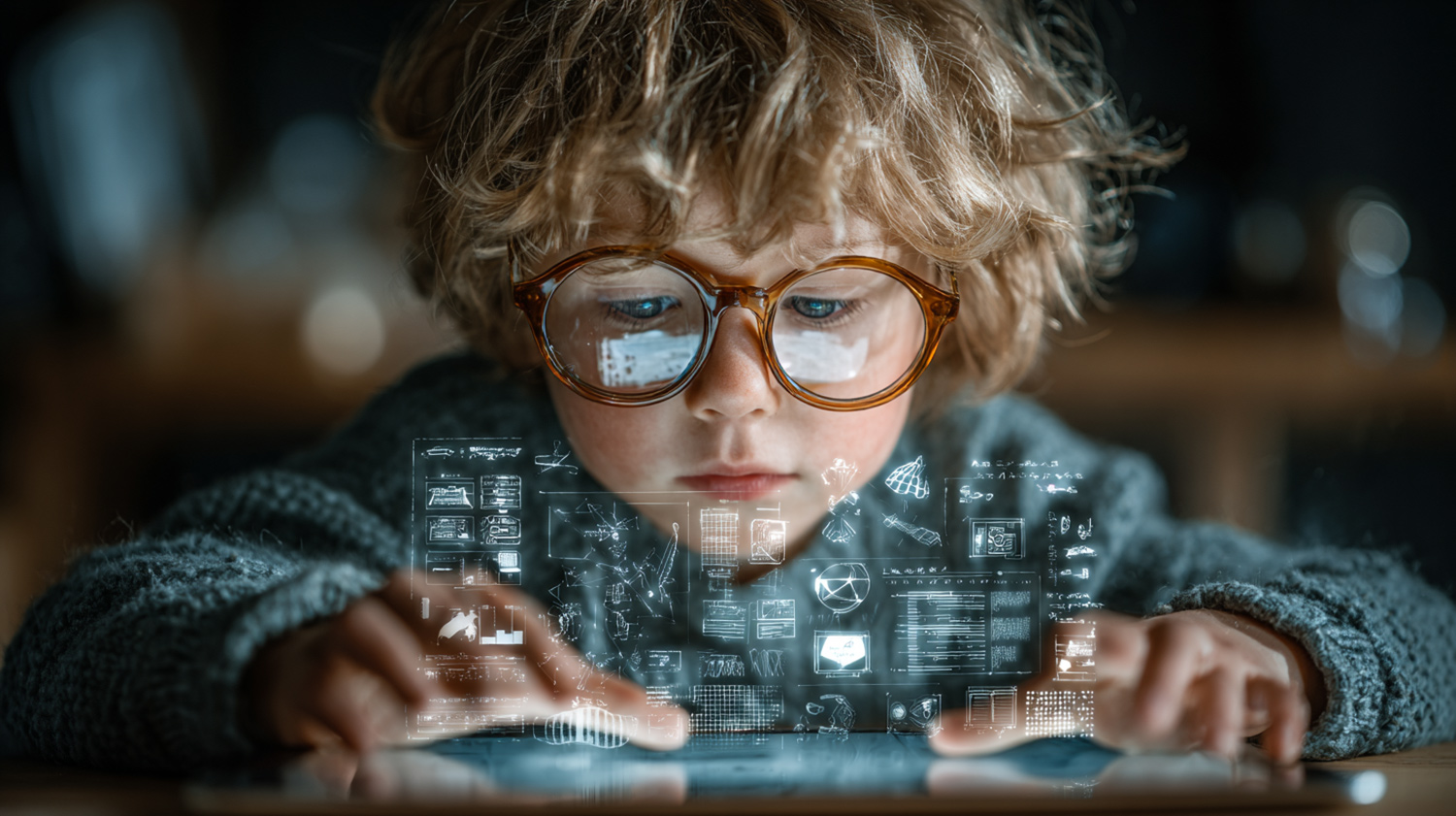

At some point on a weekend, many parents find themselves in the same tiny standoff: a child in socks, a phone or tablet glowing like a campfire, and an adult voice that wants to say yes because it would be so easy, but also wants to say no because the week already felt like one long bargain with screens. The question arrives dressed as a practical problem. "What should we do today?" But underneath it is a quieter tension, the one that sits behind so many modern parenting decisions: Can we make time feel meaningful without making it feel like school?
The internet, eager as a golden retriever, offers answers in the form of lists. Fifty science experiments. Thirty crafts. Ten brain games. They can be useful. They can also make parents feel as if childhood is a subscription service and everyone else is remembering to redeem their coupons. The truth is that "educational" is not a category you can shop in. It is something that happens in an atmosphere. It is a way attention gets shaped, a way questions get welcomed, a way a kid experiences, "I can figure this out," and, just as important, "Someone cares what I notice."
This is an article for families who want to tip the day, just a little, toward curiosity, without turning that desire into pressure. Not a checklist, not a curriculum, not a performance. More like a set of lenses, with enough research behind them to be reassuring and enough room in them to fit real life.
• • •
Start with what developmental science has been saying for a long time, even if it keeps needing to be said again: play is not the opposite of learning. It is one of the ways children do it. In a widely cited clinical report in Pediatrics, the American Academy of Pediatrics argued that play supports healthy brain development and helps children build skills that are hard to teach directly, like self regulation, problem solving and social competence. The report's premise is simple: when children are freely engaged, they practice the very mental moves that later show up as "academic" skills.
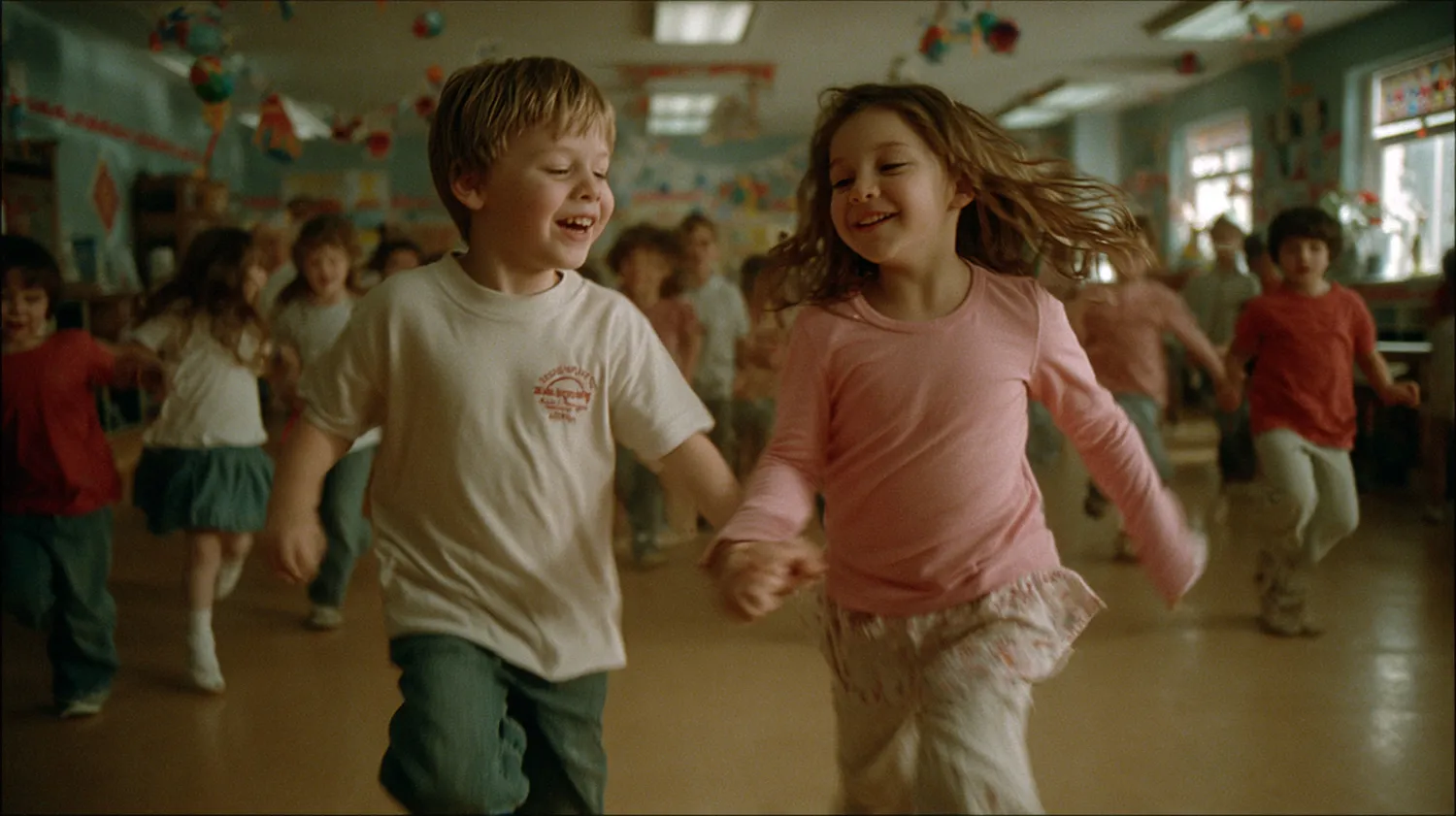
That can be easy to forget because school tends to sort learning into subjects, and adult life tends to sort time into "productive" and "wasted." Play refuses both categories. It is messy. It repeats. It has false starts. It is also the place where children rehearse agency. A kid building a cardboard city is quietly running a seminar on physics, geometry, persuasion and municipal planning. A kid inventing a game is doing negotiation, rule making and conflict resolution, all without anyone using those words.
• • •
If you are a parent who worries, "Sure, but are they actually learning," it can help to look for the mechanisms rather than the output. One of the most robust ideas in early development is the value of responsive back and forth interaction. The Harvard Center on the Developing Child describes "serve and return" exchanges as a kind of conversation, a child serves a sound, a question, a look; an adult returns with attention, language, a response. Over time, those rallies help build the architecture of the brain. You do not need flashcards for this. You need presence, even imperfect presence, and a willingness to be pulled into a child's line of curiosity for a few minutes at a time.
This is why so many educational activities that "work" are surprisingly ordinary. The educational part is not the fancy materials, it is the invitation. When you set out a pile of blocks and then ask, with genuine interest, "How high do you think it can go before it falls," you have turned play into a small scientific study. When you sit nearby while a child draws and say, "Tell me about what you are making," you have given them a reason to narrate, organize and elaborate. The activity is a stage. The learning is in the relationship and the thinking.
• • •
Still, parents do not live inside theory. We live inside afternoons. One of the most useful shifts is to stop looking for activities that "teach" and start looking for activities that naturally generate talk and decisions. That is why cooking is such a reliable educational engine. It comes with numbers, measurements, heat, timing, and the kind of real consequences that make attention sharpen. And it can be done at almost any age, with the level of responsibility adjusted like a stove knob.
In a 2023 study in the Journal of Applied Developmental Psychology, researchers led by Bradley J. Morris tested a simple idea: what happens when you embed "why" and "how" questions into an everyday recipe. Families who received prompts produced substantially more "challenging" STEM talk, the kind that asks for explanations rather than labels. The point is not that every family needs to pepper dinner with Socratic inquiry. It is that the same action, popping popcorn, making pancakes, stirring soup, can become a very different cognitive experience when someone gently nudges the conversation toward "What do you think will happen if…?"
For younger children, the educational sweet spot often looks like participation with guardrails. A first grader can pour pre measured ingredients, stir, and watch the batter change. A fourth grader can double a recipe and feel fractions become physical. A middle schooler can take over timing and heat, and learn the emotional regulation of waiting for something not to burn. A teenager can chase the rabbit hole of fermentation or regional cuisines and realize that culture is an applied subject, not a chapter heading.
Board games, too, are quietly powerful. They are often sold as entertainment and, yes, they are. They are also concentrated practice in holding rules in mind, inhibiting impulses, tracking other people's choices, and tolerating the discomfort of losing. A 2024 school based intervention study published in the journal Brain Sciences reported that playing modern "filler" board games in classrooms was associated with improvements in certain memory measures and mathematical skills for children around eight to ten years old. You do not need to replicate the study at home. But it is a helpful reminder that the habits we associate with school success, attention, working memory, flexible thinking, are exercised in settings that feel nothing like school.
The parents I know who successfully build "educational" time into family life often do it by choosing activities with a built in structure but a flexible outcome. A jigsaw puzzle is like this. So is building with LEGO, creating a stop motion video with toys, designing a scavenger hunt for siblings, or making a tiny "museum" on a bookshelf with labeled objects. The structure gives the brain something to grip. The open endedness gives the child ownership. And ownership is a kind of motivation that does not need bribing.
If all of this sounds lovely and your family life is currently a soup of appointments, fatigue and sibling conflict, that is not a personal failure. It is the context in which modern parents operate. The best activities are often the ones that can survive interruption. Five minutes of tinkering with a magnet kit while dinner cooks. A quick "design challenge" with paper and tape while you wait for a ride. A car conversation that turns into a debate about what would happen if people lived underwater. These small pockets matter because learning is cumulative. It accumulates the way droplets do, not the way grand gestures do.
• • •
Then there is the world outside the house, which can feel, to a busy parent, like both a gift and a logistical threat. Libraries, museums, nature centers, community makerspaces and after school clubs are sometimes talked about as enrichment, as if they are extra. The research on informal learning suggests they are often where knowledge becomes sticky, because it is attached to emotion, social connection and choice.
The National Research Council has spent years synthesizing research on informal learning, including in its report Surrounded by Science: Learning Science in Informal Environments, published through the National Academies Press. One of its most helpful points is that informal settings can build not only facts but identities: a child begins to see themselves as someone who asks questions, notices patterns and belongs in "science" or "art" or "history."
Museums, in particular, do their best work when adults release the urge to turn them into quizzes. Research on family learning in museums and other informal settings has repeatedly found that children's understanding deepens when caregivers follow the child's lead, ask open questions, and treat noticing as valuable in itself, rather than delivering a running lecture. Even studies of intergenerational visits have described adults shifting among roles like playmate, storyteller, and guide, depending on the moment.
• • •
Nature is another place where learning hides in plain sight. In 2025, researchers publishing in Physiology & Behavior reported evidence that outdoor physical activity produced stronger short term improvements on certain cognitive measures, like attention and working memory, than the same activity done indoors, in a sample of early adolescents. This kind of study does not mean outdoor play is a cognitive supplement you must dose. It does suggest that time outside is not just "burning energy." The environment itself, with its unpredictable textures and rhythms, seems to ask the brain to do more work in a beneficial way.
If you have ever watched a child become absorbed by a puddle, an ant hill, a stick they are convinced is a staff, you have seen the educational value of the outdoors. It is physics and biology, yes. It is also the practice of observation. It is learning to be bored long enough to become interested. That is a skill our era makes unusually hard to acquire, and unusually valuable to have.
One reason parents often reach for "activities" is the fear that, left alone, children will default to screens. That fear is not irrational. But it can also trap families in a binary: either we provide constant entertainment, or devices will swallow the day. The American Academy of Pediatrics has been urging a different frame for years, emphasizing not a single universal time limit but the idea of balance and context. Their Family Media Plan and their more recent "5 Cs" framework, child, content, calm, crowding out and communication, are meant to help families notice what media is replacing and how it is affecting sleep, relationships and mood. The practical translation is that the best educational activities are often the ones that make screens less compelling, not through restriction, but through competition. They offer real sensation, social feedback, a sense of competence. A kid who is deeply building, cooking, playing, exploring, is not simultaneously scrolling.
• • •
As children get older, "fun educational activities" can start to feel like a younger kid's genre. A seventh grader does not always want to bake with you. A high schooler may prefer their room, their music, their friends, their online universe. But older kids still learn in the same fundamental ways: through relationships, through challenge that feels chosen, through experiences that connect knowledge to identity.
One way to think about the middle school years is that they are a laboratory for independence. The activities that matter are often those that let kids practice real decision making with low stakes. Learning to budget for a small project. Planning a route for a bike ride. Volunteering in a way that reveals how organizations actually function. Joining a club that has a season, a performance, a competition, a deadline. These settings give adolescents something school sometimes struggles to provide: a reason to persist that is not a grade.
Reading, too, changes shape with age. It is less about decoding and more about meaning. That makes it especially vulnerable to being crowded out. In 2025, an analysis of two decades of the American Time Use Survey published in iScience found that the proportion of people reading for pleasure on an average day declined substantially between 2003 and 2023. The finding is not a moral indictment of modern life. It is a signal about attention as a limited resource. The families who keep reading alive often do it by treating books not as homework but as a culture, something that exists in the house the way music does. A teenager may not want to read what you choose, but they may read what they choose if it is available and not weaponized.
This is also where arts and culture can feel like both a luxury and, increasingly, a necessity. UNESCO's 2024 Framework for Culture and Arts Education argues for culture and the arts as a way to develop creativity, critical thinking and a sense of belonging. Parents do not need a formal arts program to take that seriously. They can take kids to a local performance. They can make a family tradition of photographing ordinary things with intention. They can encourage a child to make something and then share it, a song, a short film, a zine, a mural on paper taped to the wall. The educational value is not just the technique. It is the experience of making meaning and being seen.
If you are parenting a teenager, you may also feel the tug of a more pointed question: what kinds of activities actually prepare them for the future. It is tempting to chase the hottest skill, coding, AI literacy, entrepreneurial grit. Those can be meaningful. But the underlying capacities most experts emphasize, attention, flexibility, communication, self direction, are built as much by sustained projects as by any particular content. A teenager who builds a compost system, learns guitar, trains for a 5K, runs the sound board for theater, helps a younger sibling with algebra, is developing the same muscles that employers later call "initiative" and "problem solving."
• • •
There is a small, almost sneaky comfort in all of this research: it keeps pointing back to the same human basics. Children learn when they are safe enough to explore and challenged enough to stretch. They learn when adults take their questions seriously, even when the questions arrive at inconvenient times. They learn when they have materials, time and permission to get absorbed. They learn when they are bored, and someone does not panic and immediately fill the silence.
If you are looking for a definition of an educational activity that fits kindergarten through twelfth grade, it might be this: something that makes a child more awake to the world and more confident that they can act in it. That can happen in a museum. It can happen on a sidewalk with chalk. It can happen while cooking dinner, or while playing a game that ends in laughter and mild outrage. It can happen during a conversation at bedtime where your child tells you a theory about why the moon follows the car.
The goal is not to optimize childhood. The goal is to make room for the parts of childhood that do not show up on a transcript: wonder, persistence, delight, and the slow accumulation of competence. On the next Saturday when the question arrives again, "What should we do today," you do not need a perfect answer. You need something you can do together, that leaves your child a little more curious than they were five minutes ago. Often, that is enough.
Sources
- Yogman, Michael, et al. "The Power of Play: A Pediatric Role in Enhancing Development in Young Children." Pediatrics. 2018.
- American Academy of Pediatrics. "The Power of Play: How Fun and Games Help Children Thrive." HealthyChildren.org (AAP resource). Updated 2023.
- Center on the Developing Child at Harvard University. "Serve and Return: Back-and-forth exchanges." Harvard University (web resource). n.d. (accessed 2025).
- Morris, Bradley J., et al. "Cooking up STEM: Adding wh-questions to a recipe increases family STEM talk." Journal of Applied Developmental Psychology. 2023.
- Estrada-Plana, Verónica, et al. "Benefits of Playing at School: Filler Board Games Improve Visuospatial Memory and Mathematical Skills." Brain Sciences. 2024.
- National Research Council. "Learning Science in Informal Environments: People, Places, and Pursuits." National Academies Press. 2009.
- National Research Council. "Surrounded by Science: Learning Science in Informal Environments." National Academies Press. 2010.
- Walters, R., et al. "Outdoor physical activity is more beneficial than indoor physical activity for cognition in young people." Physiology & Behavior. 2025.
- Bone, J. K., et al. "The decline in reading for pleasure over 20 years of the American Time Use Survey." iScience. 2025.
- UNESCO. "Framework for Culture and Arts Education." UNESCO. 2024.
- American Academy of Pediatrics. "Family Media Plan tool and media guidance (including the "5 Cs" framing)." HealthyChildren.org. n.d. (accessed 2025).
- Leinhardt, Gaea, & Knutson, Karen. "Grandparents Speak: Museum Conversations across the Generations." Visitor Studies. 2006.