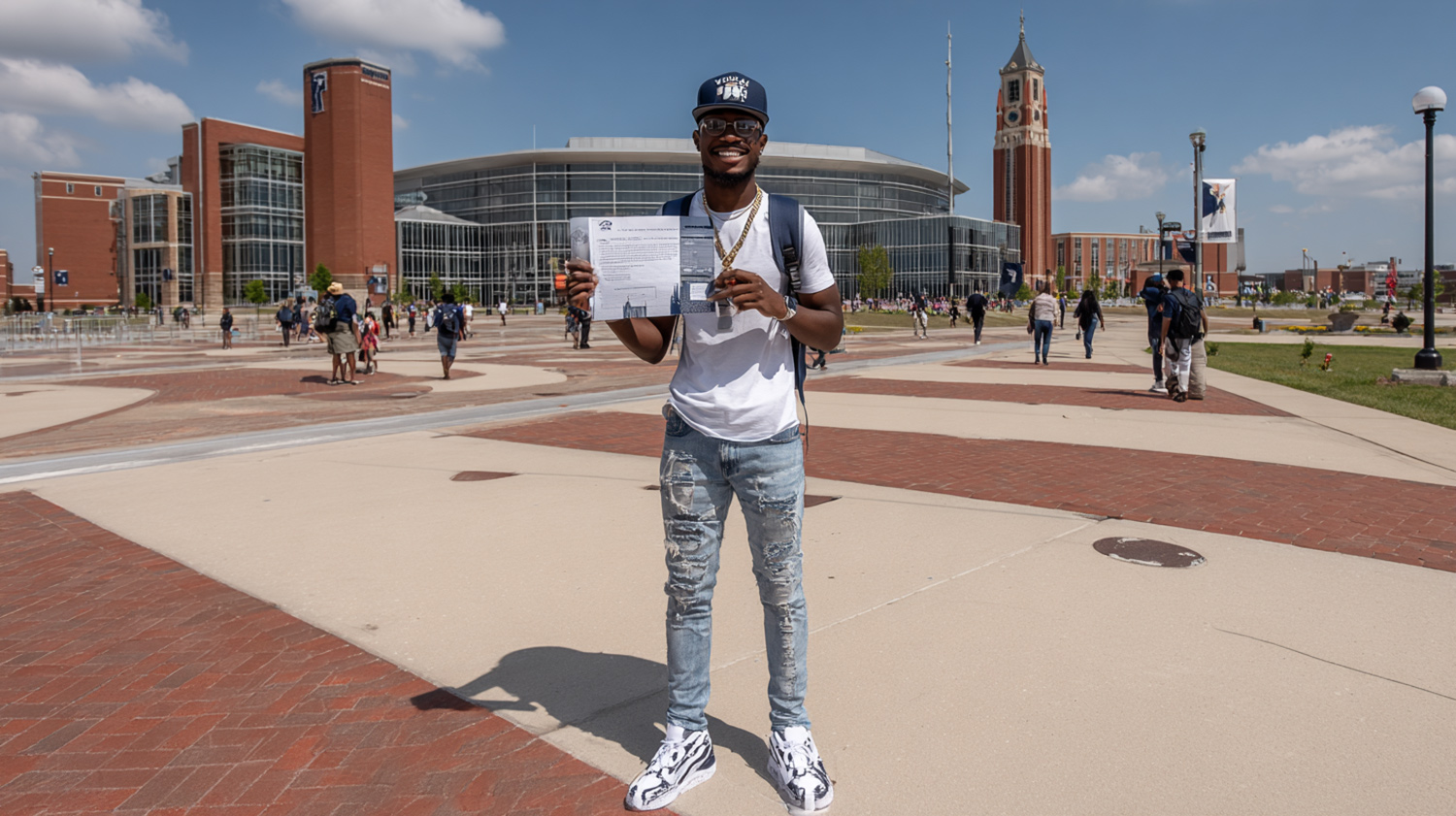


The 2025 cycle looked less like a tidy decision season and more like a market that kept clearing after the bell. Waitlists moved early, moved late, and moved in waves. Some colleges dangled new money after families had already paid deposits elsewhere. Here is what is driving it, how the mechanics actually work, and how parents can protect both options and sanity without stepping into ethical quicksand.
College admissions used to have a kind of narrative arc: apply in the fall, wait in the winter, decide by May 1, and then start shopping for dorm rugs. In 2025, that arc bent. Families watched classmates come off waitlists in May, June, even July, while others received new merit offers after they had already committed somewhere else. If you felt like the process suddenly had overtime and an overtime budget, you were not imagining it.
This piece explains why that happened and why it is likely to keep happening. The short version is that colleges are managing risk in a world where the inputs have gotten noisier: more applications through platforms like the Common App, more uncertainty about who will actually enroll, more price sensitivity, and more administrative turbulence around financial aid timelines. In response, many institutions have leaned harder on yield management, tuition discounting, and the waitlist as a flexible valve.
Understanding those levers matters because it changes what good family strategy looks like. You cannot control whether a college underestimates its yield or decides it needs more students from a certain region or major. You can control how you build your list, how you compare offers, how you communicate, and when you keep your options open.
• • •
Why 2025 felt like chaos
Start with volume. The Common App reported nearly 1.5 million distinct first-year applicants in the 2024-2025 season, with total application volume rising as well - a pattern that continues to concentrate demand at some schools while creating unpredictability for others.
Then add timing. The federal financial aid system has been through repeated disruptions and delays in recent cycles. The Government Accountability Office has documented how FAFSA rollout problems created uncertainty for students seeking aid, and surveys have found that many students experienced difficulty submitting the form and that delays in aid offers affected enrollment decisions.
Now add price. Private nonprofit colleges, in particular, have been discounting their sticker price at historically high levels. NACUBO reported that average tuition discount rates reached the mid-50% range for first-time, full-time undergraduates at participating private nonprofits in 2024-2025.
Put those together and you get a system that is more sensitive to small shocks. A few percentage points of misjudged yield can mean empty beds or overbooked housing. A delay in financial aid data can compress decision windows and increase summer 'melt' risk, when students who intended to enroll do not show up. And when net tuition revenue is under pressure, the incentive to keep recruiting into May and beyond gets stronger.
One visible outcome was a kind of post-Decision Day wooing: families reported new, substantial merit offers arriving after May 1, sometimes explicitly designed to get a student to switch. Coverage of the phenomenon described colleges 'poaching' committed students with late money, a tactic that would have been widely taboo in an earlier era of admissions norms.
Waitlists, meanwhile, stopped feeling like a polite limbo and started functioning like a second admissions round. Commentators noted unusually active waitlist seasons, with movement clustering in May and June but sometimes extending into summer, especially for institutions trying to land precisely on an enrollment target.
• • •
The mechanics: how colleges decide when to go to the waitlist, and when to offer money
To see why the waitlist and late scholarships are linked, you have to picture admissions as a forecasting problem. Colleges build an incoming class the way airlines fill seats: they accept more students than they have space for, betting that only a certain fraction will enroll. That fraction is yield, and predicting it is the quiet core of enrollment management.
Yield models use historical data, but the features have multiplied. Colleges track application plan (early decision vs regular), geography, academic program interest, demonstrated interest signals, financial need and merit profiles, and even macro conditions like economic uncertainty. When the model's confidence drops, colleges add buffers. One buffer is a larger waitlist. Another is a more aggressive discounting budget held back for later in the cycle.
The waitlist gives an institution optionality. If deposits come in light, the school can admit more students. If a particular major is underfilled, it can select waitlisted students who fit that need. If aid packages arrive late across the sector and students hesitate, a college can pause, watch, and then move.
Late merit offers often come from the same logic. Many schools allocate institutional grant and scholarship dollars dynamically. If a college expects a certain number of full-pay students and that cohort comes in smaller than predicted, it may need to trade discounting for enrollment. In other cases, the aid budget is not exhausted, and late awards become a way to stabilize the class before orientation.
This is not only about selective colleges. In fact, some of the most intense late-stage recruiting happens at schools where a small enrollment miss has big budget consequences. Tuition discounting data shows how widespread grant aid has become as an enrollment tool at private nonprofits, which helps explain why 'new money' can appear late - and why it can be sizable.
Meanwhile, the May 1 reply date still functions as a cultural marker even as its enforcement has softened. NACAC has described May 1 as the normal reply date for many plans, while also urging institutions to extend commitment and scholarship deadlines when financial aid timing is disrupted.
A crucial complication is that the old 'no poaching' norms were formally weakened after antitrust scrutiny pushed NACAC to remove certain recruiting rules from its code in 2019, and a federal settlement later constrained the organization from enforcing similar rules. That shift did not force colleges to recruit students who had already deposited elsewhere, but it made the boundary fuzzier and the incentives louder.
• • •
What families can do without getting played
The first mindset shift is simple: treat May as a decision point, not a finish line. If you are on a waitlist and the college is truly a top choice, assume the story could continue into June. That means keeping practical details ready: current grades, an updated resume of spring accomplishments, and a short, specific statement of continued interest that does not read like a form letter.
At the same time, do not let the waitlist swallow your spring. A waitlist is not a promise. Many highly selective schools admit only a small slice of their waitlists in any given year, and some take none. The healthiest approach is to commit to a school you would be glad to attend, then treat waitlist movement as a possible upside rather than a plan.
Second, understand what a late scholarship offer really is. Sometimes it is a genuine reallocation of institutional funds as the class takes shape. Sometimes it is a yield intervention, triggered by internal dashboards that show the school is short of a target. Either way, you should evaluate it the same way you would evaluate an original offer: net cost, conditions to keep the award, and whether the academic and social fit still holds when you imagine four years instead of a headline number.
Third, negotiate like an adult, not like a hostage negotiator. Most aid reconsideration is not a bidding war. It is an appeal process where the school wants a reason it can document. A competing offer can help, but the most effective inputs are usually concrete: a corrected financial picture, a change in circumstances, or a clearly explained gap between the net price and what your family can realistically pay. The FAFSA delays and variability in aid timing have made these conversations more common, and some institutions have explicitly encouraged flexibility in deadlines as a result.
Fourth, know the line you should not cross: double depositing. Some families quietly pay multiple enrollment deposits to buy time. The College Board has described double depositing as unethical, and while enforcement varies, it can create real risk. In the best case it costs you money. In the worst case it can lead to a rescinded offer if institutions compare lists or if a counselor reports it.
If a new offer arrives after you have deposited elsewhere, you still have choices that are cleaner than hiding. Read the deposit agreement you signed. Some schools allow withdrawal with partial refunds by a certain date; others do not. If you are considering switching, notify the original school promptly and professionally. Admissions offices plan housing, orientation, and course schedules based on those numbers. In a year when many colleges are already managing 'melt,' clarity helps everyone.
A note about leverage: families hear the phrase 'use competing offers' and imagine a zero-sum game. In reality, the power dynamic depends on where the college is in its own cycle. A school that is oversubscribed may not move at all. A school that is still shaping its class might. The only way to know is to ask - and to ask early enough that the aid office still has room to act.
• • •
What this signals about where to apply
The waitlist chaos and late scholarship offers are not random. They are symptoms of a market with two simultaneous truths: more students are applying widely, and many colleges are worried about enrollment and revenue. Those truths can coexist because the distribution is uneven. Flagship publics and top-ranked privates may see demand surge, while regional privates and some second-tier publics fight hard for net tuition.
That means the old advice to build a list of reach, match, and safety still holds, but the definitions need updating. A 'safety' is not simply a school where admission is likely. It is a school where affordability is predictable. If the net price is uncertain, it is not a safety, no matter how high the acceptance rate.
It also means that merit aid strategy is no longer a side quest. With tuition discounting at record levels at many private nonprofits, merit can be the main pricing mechanism. Families who ignore it can end up comparing sticker price fantasies rather than actual offers.
Finally, watch for schools that have incentives to keep recruiting late. Institutions facing demographic pressure, international enrollment uncertainty, or program-level capacity imbalances are more likely to use the waitlist aggressively and to make late financial moves. That does not make them 'bad' schools. It does mean families should treat the calendar as flexible and ask direct questions about financial aid timing, scholarship renewal requirements, and deposit policies.
Common App trend reporting has shown growth in applicant volume and shifting composition across income groups and member types, which can push colleges toward more cautious yield assumptions. When the applicant pool changes quickly, historical models can lag. That is one reason you see bigger buffers - and more late-stage adjustments.
• • •
What to watch for in the next cycles
First, expect more forecasting, not less. Admissions and enrollment teams are leaning into analytics, and the models will get better, but they will not eliminate uncertainty. The biggest unknown is not whether a student is admissible; it is whether that student will enroll at a given net price and under a given set of timing constraints.
Second, the aid pipeline is now part of admissions strategy. When financial aid timelines slip, colleges either extend deadlines or risk losing students who cannot compare offers in time. The last few cycles have shown how quickly a federal bottleneck can become an institutional recruitment problem.
Third, tuition discounting is unlikely to retreat soon. When more than half of published tuition revenue is effectively being returned to students as institutional grant aid at many private nonprofits, pricing becomes a continuous negotiation, not a once-a-year decision.
Finally, the waitlist is becoming a core enrollment instrument rather than an emergency tool. As commentators have noted, some colleges now use waitlists earlier and more actively as part of their standard playbook. For families, that means treating the waitlist as a real parallel track, with its own deadlines, communications, and emotional budget.
The best preparation is not a perfect tactic. It is resilience in process: build an affordable set of options, compare net prices rather than promises, and be ready for the season to extend. The new normal is not that every student will get a late scholarship or a waitlist call. It is that the system is built to keep moving until the class is full.
Sources
Government
- U.S. Government Accountability Office (GAO). "Botched FAFSA rollout leaves uncertainty for students seeking financial aid for college." Sep 24, 2024.
- U.S. Department of Justice. "United States v. National Association for College Admission Counseling - Complaint." Dec 12, 2019.
Academic and research institutions
- National Student Clearinghouse Research Center. "Current Term Enrollment Estimates." May 22, 2025.
- National Student Clearinghouse Research Center. "Undergraduate Enrollment Showing Signs of Second Straight Year of Growth." Oct 23, 2024.
- Common App. "End-of-season report, 2024-2025: First-year application trends." Aug 13, 2025.
- Common App. "Common App End-of-Season Report 24-25 (PDF)." Aug 13, 2025.
Industry and professional associations
- NACUBO (National Association of College and University Business Officers). "NACUBO Study Finds Private Colleges and Universities Are Offering Record Financial Aid to Students." Jun 24, 2025.
- NACUBO. "Results From the 2024 NACUBO Tuition Discounting Study." Oct 23, 2025.
- NACAC (National Association for College Admission Counseling). "NACAC and other associations urge extensions on May 1 commitment deadlines." Jan 31, 2024.
- Inside Higher Ed. "NACAC agrees to change its code of ethics." Sep 29, 2019. (free account may be required)
- College Board. "College Application Ethics." n.d. (accessed 2025).
News and explanatory coverage
- New York Magazine - Intelligencer. "There's a Crazy New Wrinkle to College Admissions." May 23, 2025. (subscription may be required)
- Forbes. "College Admission Waitlist Follies." May 25, 2025.
- Axios. "Quarter of FAFSA applicants had difficulty submitting the form, new data shows." Feb 12, 2025.
- Education Week. "The Changing Face of College Applications, By the Numbers." Aug 15, 2025.
- Inside Higher Ed. "Tuition Discounting Hits Another High." Jun 24, 2025. (free account may be required)