
The morning drop-off at Maple Street Preschool looks, to the untrained eye, like controlled chaos. A four-year-old negotiates fiercely for one more hug. A teacher kneels to examine a rock a child discovered in the parking lot. Two friends reunite with the unrestrained joy that only small people can muster. For the parent lingering at the door, coffee cooling in hand, this scene prompts a familiar mix of hope and worry: Is this the right place? Will my child thrive here? How would I even know?
These questions arrive with urgency for millions of families each year. The stakes feel enormous, and in some ways they are. Research from the Harvard Center on the Developing Child confirms what parents intuit: the early years matter profoundly, shaping not just academic readiness but social development, emotional regulation, and the architecture of the brain itself. Yet the preschool search often begins without a map. Parents scroll through websites adorned with smiling children, tour facilities that all seem to promise roughly the same things, and ultimately make decisions based on proximity, price, or the elusive "feeling" they got during a visit.
There is a better way—not a formula that guarantees the perfect outcome, but a framework for thinking more clearly about what quality actually looks like in early childhood education. It requires looking past the marketing language and Pinterest-worthy classrooms to the interactions happening between adults and children, the philosophy guiding daily decisions, and the dozens of small signals that reveal whether a program will nurture your particular child.
• • •
The first thing to understand is that "quality" in preschool is not a single, easily measured attribute. The National Association for the Education of Young Children, which accredits early childhood programs, identifies ten standards that together define excellence—from curriculum and teaching practices to family engagement and health and safety protocols. Fewer than ten percent of the nation's early childhood programs hold NAEYC accreditation, not because the rest are failing children, but because the process is rigorous and voluntary. Accreditation can signal a program's commitment to continuous improvement, but its absence doesn't automatically indicate poor quality. Many excellent preschools operate without it.
What research consistently points to, across decades of study, is that the single most important factor in preschool quality is something you cannot see on a website or even during a brief tour: the nature of the interactions between teachers and children. Dr. Robert Pianta, a developmental psychologist at the University of Virginia who has spent his career studying early education, helped create the Classroom Assessment Scoring System, or CLASS, which measures these interactions across three dimensions. The first is emotional support—whether teachers create a warm, positive climate where children feel safe and valued. The second is classroom organization—how well teachers manage behavior, maintain productive routines, and keep children engaged. The third is instructional support—whether teachers use strategies that promote language development, extend children's thinking, and offer meaningful feedback.
Studies using CLASS have found that high-quality teacher-child interactions predict gains in children's vocabulary, early literacy skills, and social-emotional development. A 2021 study published in Frontiers in Psychology examining preschool classrooms found that instructional support and classroom organization were significant predictors of children's vocabulary growth over time. This matters enormously because language development in the preschool years is a powerful predictor of later academic success. Children who enter kindergarten with strong vocabularies tend to become stronger readers, and that advantage compounds over time.
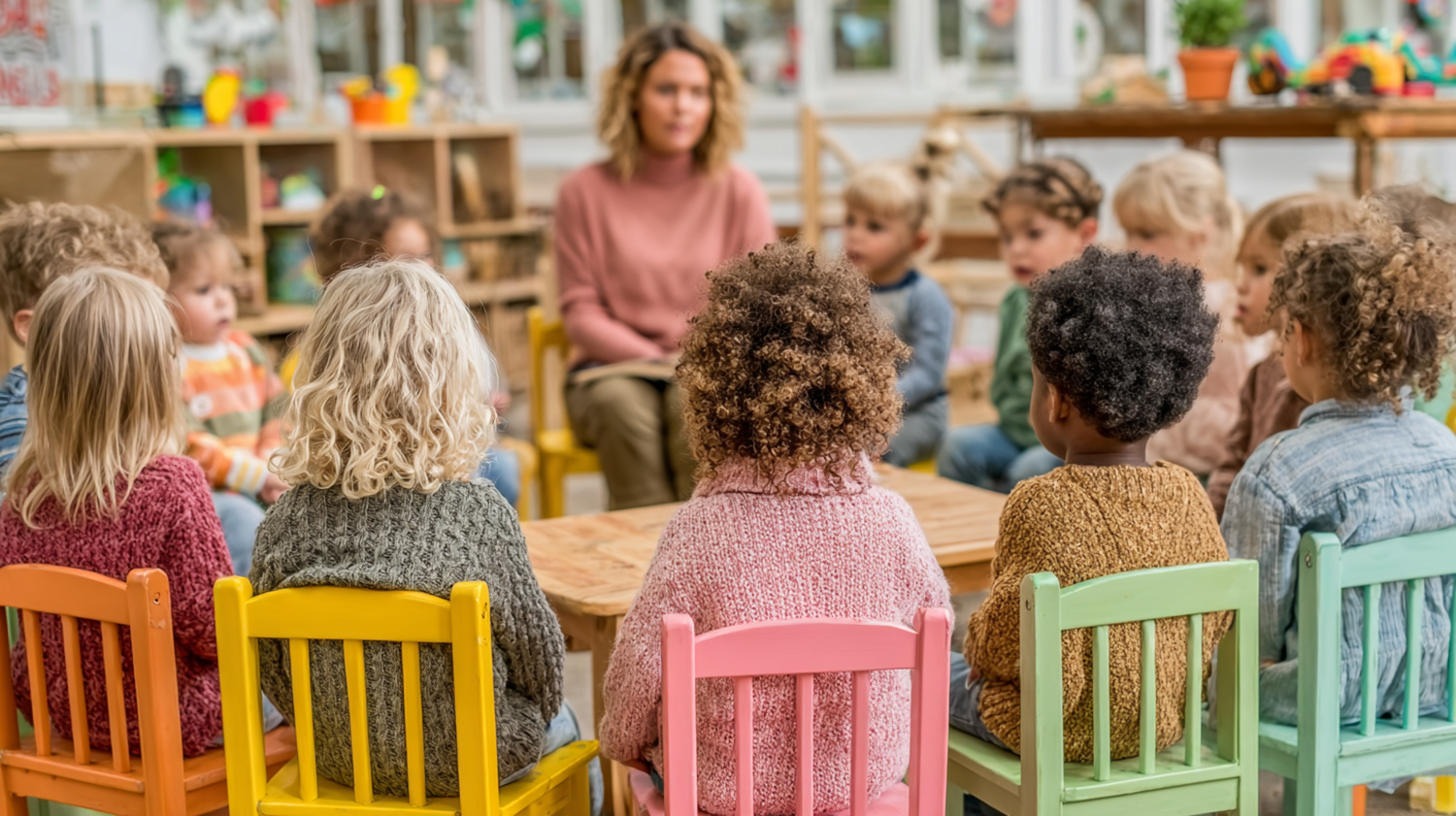
The practical implication for parents is this: during your visit, pay less attention to the bulletin boards and more attention to the conversations. Are teachers getting down on children's level, making eye contact, and truly listening? When a child struggles with a task, does the teacher offer encouragement and just enough help, or rush in to complete it for them? When conflicts arise between children, are teachers coaching them through problem-solving, or simply issuing mandates from above? These moments reveal the texture of daily life in ways that no brochure can capture.
• • •
Play vs. Academics: A False Choice
The question of curriculum deserves more nuance than it typically receives. Parents often ask whether a preschool is "academic" or "play-based," as if these were opposing philosophies. The research suggests a more complicated picture. Play is indeed the primary vehicle through which young children learn. A meta-analysis from researchers at the University of Cambridge, published in 2022, found that guided play—child-directed activity with subtle adult support—can be more effective than direct instruction for developing mathematical and spatial skills in children under eight. The American Academy of Pediatrics has stated unequivocally that play is essential to healthy development.
But this doesn't mean that any play, anywhere, automatically equals learning. The magic happens when thoughtful teachers create environments rich with opportunities for exploration and then engage with children in ways that extend their thinking. When a child builds a tower and it falls, the teacher who asks "What do you think happened?" and waits for an answer is doing something fundamentally different from the teacher who simply says "Try again" and walks away. Both approaches involve play. Only one involves the kind of responsive interaction that builds cognitive skills.
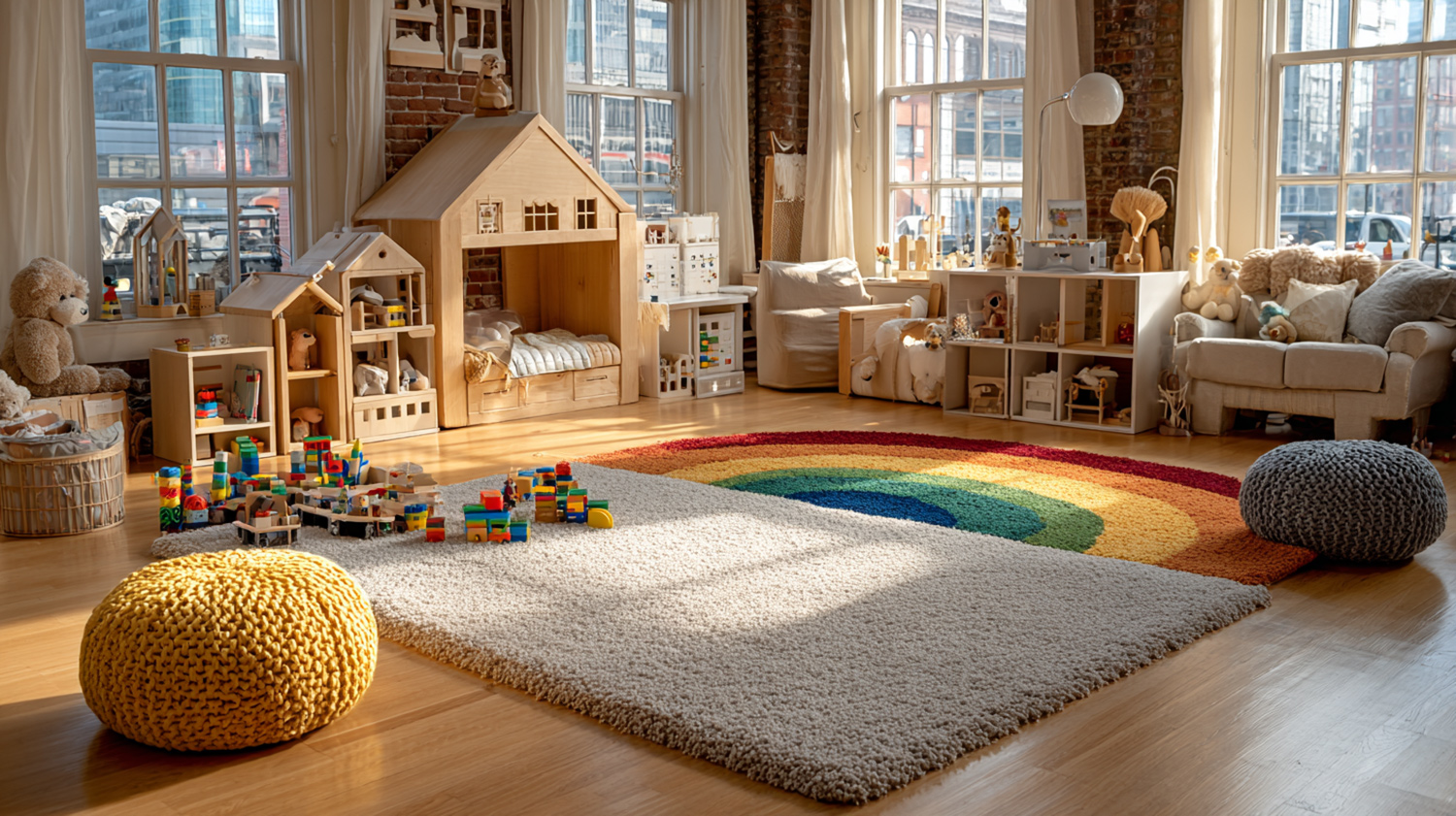
During your visit, look for evidence that play is purposeful without being scripted. Are there varied materials available—blocks, art supplies, dramatic play props, books—that invite different kinds of exploration? Do teachers participate in children's play in ways that feel natural rather than intrusive? Is there a rhythm to the day that includes time for child-initiated activity alongside more structured group experiences? The best preschools create what educators call a "prepared environment," thoughtfully designed to support learning, and then trust children to engage with it in their own ways.
• • •
Safety, Licensing, and Ratios
Safety and licensing form the non-negotiable foundation upon which everything else rests. Every state requires childcare centers to be licensed, though requirements vary significantly. California's Community Care Licensing Division, for instance, mandates specific staff-to-child ratios, background checks for all employees, and regular facility inspections. Florida and Texas have their own regulatory frameworks with different specific requirements. Before enrolling, parents should verify that a program is currently licensed and in good standing—information typically available through state databases.
Staff-to-child ratios matter more than many parents realize. NAEYC recommends that preschool classrooms for three-year-olds maintain no more than nine children per teacher, with a maximum group size of eighteen. For four- and five-year-olds, the recommendation is ten children per teacher with a maximum group of twenty. These numbers aren't arbitrary. Research shows that lower ratios allow for more individualized attention and more of the responsive interactions that drive development. When ratios are too high, teachers spend their energy managing logistics rather than engaging meaningfully with children.
Dr. Jennifer Katzenstein, director of psychology and neuropsychology at Johns Hopkins All Children's Hospital, advises parents to ask not just about ratios but about staff qualifications and training. What education do the teachers have? What ongoing professional development is provided? How long have the current teachers been at the school? High turnover is a red flag, both because it disrupts children's attachment relationships and because it often signals problems with working conditions and leadership. When teachers stay, it usually means they feel valued and supported—conditions that translate into better care for children.
• • •
What the Walls Tell You
The art on the walls tells a story. Walk into any preschool and you'll see children's work displayed, but look closely at what that work reveals. In high-quality programs, you'll see process-oriented art—paintings where the colors are mixed in unexpected ways, collages that look nothing like each other, drawings that clearly emerged from a child's imagination rather than a teacher's template. If every child's project looks identical, with perfectly placed googly eyes and cotton balls arranged in neat rows, that signals an emphasis on product over process, on adult aesthetics over children's creativity.
This principle extends beyond art. During your visit, notice whether children seem to have genuine agency. Can they choose activities, at least some of the time? Are their ideas taken seriously? Do teachers ask questions that don't have predetermined answers? Early childhood educators talk about "following the child's lead," and while this doesn't mean children run the show, it does mean their interests and developmental needs guide the curriculum. A classroom full of worksheets and rote learning drills—practices that research has shown to be largely ineffective for preschool-age children—suggests a fundamental misunderstanding of how young children learn.
The outdoor environment deserves particular attention. Children need space to run, climb, and engage in the kind of physical play that develops both gross motor skills and social competence. If the outdoor area is significantly smaller than the indoor classrooms, or if outdoor time seems like an afterthought, that's worth questioning. Look for variety in the outdoor space—areas for active play, quieter spots for observation and conversation, elements from nature when possible. Some of the most important learning happens outside, where children encounter unpredictable situations and have room to take appropriate risks.
• • •
Warning Signs
What should give you pause? Experts point to several warning signs that warrant further investigation. A director who can't or won't answer your questions clearly, or who seems defensive when you ask about policies and practices. A building where you can't hear children's voices—silence in a preschool often indicates an overly controlling environment. Children who seem disengaged, wandering aimlessly or staring at screens. Teachers who speak harshly to children, or who seem checked out, staring at phones while kids play unsupervised. Any reluctance to let you visit unannounced or observe the classroom in action.
Trust your observations, but also ask the questions that go beyond the script. What happens when a child is struggling to separate from a parent? How do teachers respond when children have conflicts with each other? What's the plan when your child's regular teacher is absent? How does the school communicate with families day-to-day and when problems arise? The answers—and how comfortably staff provide them—reveal the program's values and culture more than any mission statement.
If possible, visit during a regular school day rather than during an open house designed for prospective families. What you want to see is ordinary life at the school, not a polished performance. Watch drop-off, when emotions run high and teachers' patience is tested. Observe transitions between activities, which often reveal how well-organized a program truly is. Notice how teachers speak to children when they don't think parents are watching. These glimpses of the everyday are worth more than any prepared presentation.
• • •
The Bottom Line
Here, finally, is the uncomfortable truth: there is no perfect preschool, and the search for one can become paralyzing. Children are resilient. They can thrive in programs that aren't identical to some platonic ideal. What matters most is that the adults who care for your child are warm, attentive, and responsive—that they see your child as an individual and take genuine delight in watching them grow. These qualities show up in countless ways, large and small, and you'll recognize them when you see them.
The research confirms what every parent senses: early childhood matters. High-quality preschool experiences can boost vocabulary, strengthen social skills, and foster the kind of curiosity and confidence that serves children throughout their lives. But "high quality" is not a marketing term or a price point. It's found in the warmth of a teacher's voice, the purposefulness of the environment, and the countless small decisions that together create a place where children feel safe enough to explore, take risks, and learn.
In the end, you are not looking for the best preschool. You are looking for the right preschool—the one that matches your family's values, meets your child's particular needs, and feels like a place where your child will be known and cared for. Trust your instincts. Ask your questions. Watch carefully during your visits. And remember that you know your child better than any expert, any rating system, or any other parent. That knowledge is your most valuable tool in this search, and it will guide you well.
• • •
Preschool Tour Evaluation Checklist
Print this or save it to your phone for tours. Use it to take notes and compare programs.
| Focus | What quality can look like in action |
|---|---|
| First impressions | How the room feels when nobody is performing. Are adults calm and present, or constantly triaging. |
| Teacher attention | Adults notice children quickly, use names, and get down at eye level. Children seek adults for help and comfort. |
| Emotions and comfort | Tears are treated as information. Teachers soothe without shaming and help children rejoin play. |
| Transitions | Cleanup and lining up happen with routines and support, not with yelling. Children know what comes next. |
| Conflict and discipline | Teachers coach repair and problem solving. Policies avoid humiliation and harsh punishment. |
| Ratios and group size | Ask the typical ratio in your child's room, not just the licensed maximum. Notice whether staffing changes during breaks. |
| Staff stability | Ask how long lead teachers have been there, and how the program supports retention (training, planning time, benefits). |
| Safety and supervision | Controlled entry, clear visitor procedures, active supervision indoors and outdoors, safe sleep and nap monitoring. |
| Health practices | Handwashing is consistent. Cleaning is routine. Sick policy is clear and realistically enforced. |
| Outdoor play | Daily time outside when weather permits, with supervision and safe equipment. Children move, climb, dig, and explore. |
| Communication with families | Clear, respectful communication. You understand how you will hear about daily moments and bigger concerns. |
| Inclusion and support | How the program supports children with different needs, languages, and temperaments. How they partner with families. |
| Licensing and accreditation | Confirm licensing status and ask how the program handles inspections and corrective actions. If accredited, ask what that covers. |
| Practical fit | Hours, commute, tuition and fees, meals, naps, and calendar align with family life without constant stress. |
Sources
- National Association for the Education of Young Children. "The 10 NAEYC Program Standards." NAEYC, 2024.
- Center on the Developing Child at Harvard University. "From Best Practices to Breakthrough Impacts: A Science-Based Approach to Building a More Promising Future for Young Children and Families." Harvard University, 2016.
- Pianta, R.C., Hamre, B.K., & Allen, J.P. "Teacher-Student Relationships and Engagement." In Handbook of Research on Student Engagement. Springer, 2012.
- Sun, J., Rao, N., & Pearson, E. "Language Development in Early Childhood: Quality of Teacher-Child Interaction and Children's Receptive Vocabulary Competency." Frontiers in Psychology, 2021.
- University of Cambridge. "Play-based learning can improve academic outcomes, study finds." 2022.
- Weisberg, D.S., Hirsh-Pasek, K., & Golinkoff, R.M. "Guided Play: Where Curricular Goals Meet a Playful Pedagogy." Mind, Brain, and Education, 2013.
- Johns Hopkins All Children's Hospital. "10 Must-Ask Questions and Tips on Choosing a Preschool." Johns Hopkins Medicine, 2024.
- California Department of Social Services, Community Care Licensing Division. Title 22 California Administrative Code.
- Burchinal, M., et al. "ECE quality indicators and child outcomes: Analyses of six large child care studies." Early Childhood Research Quarterly, 2019.
- NAEYC. "Staff-to-Child Ratio and Class Size." NAEYC Accreditation Standards, 2018.